
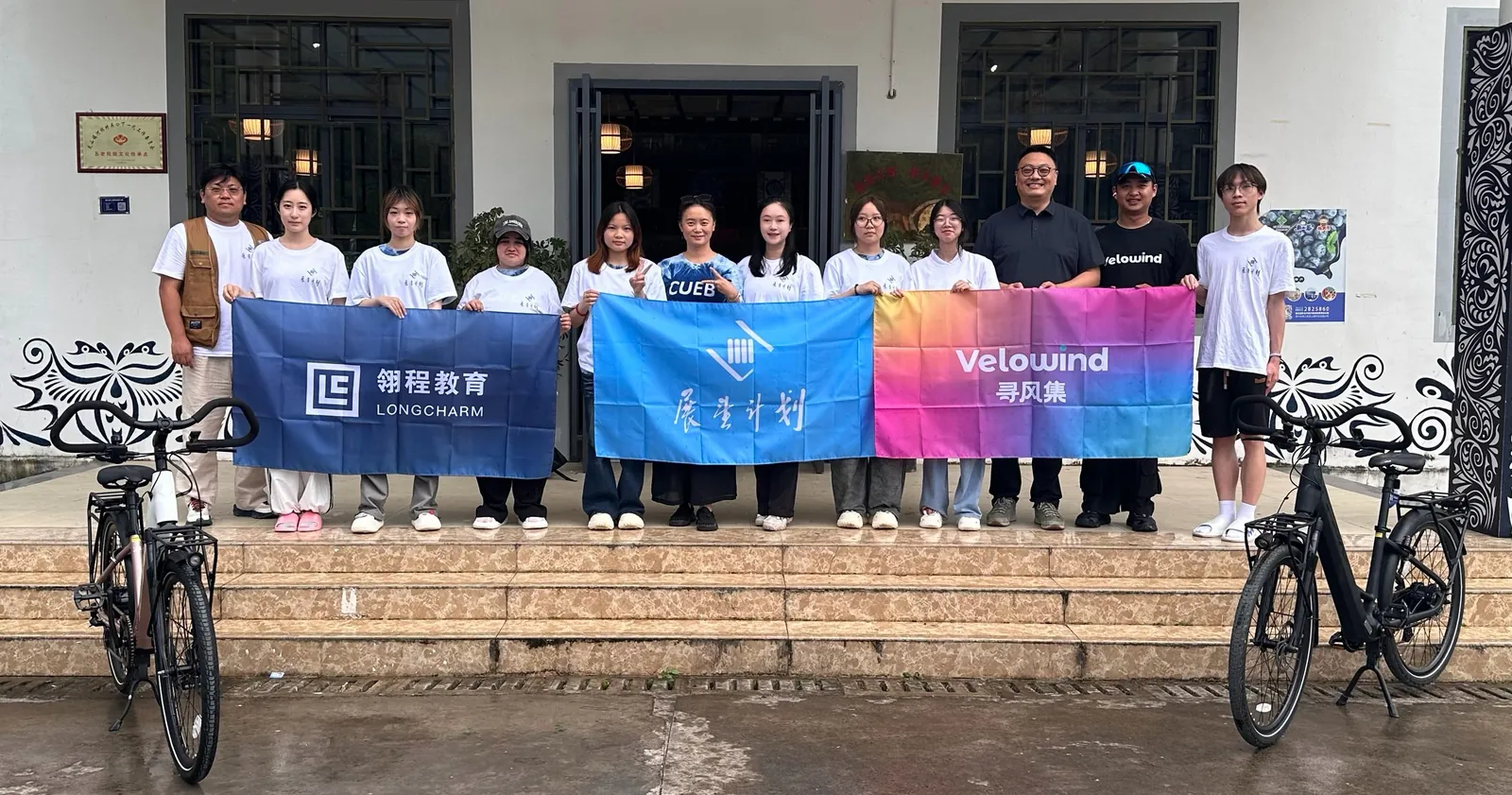
On July 15, the 2026 Capital University of Economics and Business (CUEB) Guizhou·Majiang·Heba Summer Social Practice program was launched in Heba Village, Longshan Town, Majiang County, Qiandongnan Prefecture. As a co-organizer of this event, Shanghai Prospect Development Institute (SPDI) actively coordinated with Longcharm Education and Velowind to jointly participate in this public welfare practice. Dr. Wang Lina, Council Member of SPDI and Co‑founder of Longcharm Education, and Liu Hailiang, Founder and Chairman of Velowind, traveled from Beijing and Shanghai respectively to Heba Village, together with Liu Zinan (Public Affairs Director of Longcharm Education), Qi Fang (Head of Velowind's Chengdu Branch), and Zhang Zijian (Velowind Cycling Team Leader), to deeply engage in the day's series of activities.
This cross‑regional journey was a concrete action by SPDI, Longcharm Education, and Velowind to jointly fulfill social responsibility and care for the next generation. The three parties, alongside CUEB student volunteers, entered primary school classrooms, visited cultural heritage sites, and went to the rice‑fish farming base—interacting with children, working side by side with university students, spreading warmth through companionship, and supporting rural development through practical involvement.
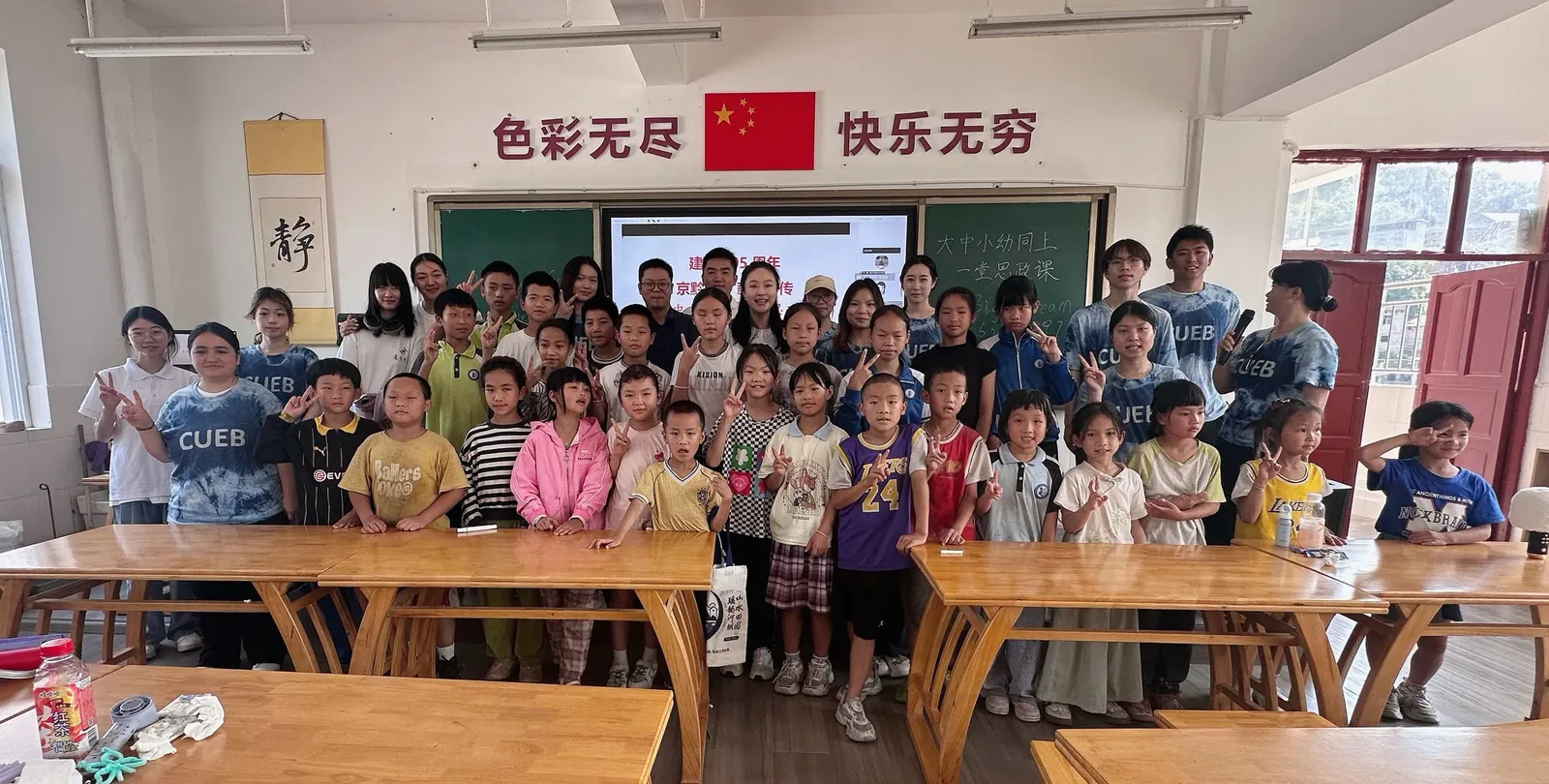
In the morning, a cross‑level ideological and political education class, themed “Beijing‑Guizhou United, Passing the Torch,” was held at Heba Primary School, bringing together students from kindergarten through university. Ouyang Xiuzhen, Deputy Party Secretary of Longshan Town; Chen Lixun, Principal of Heba Primary School; and Professor Pan Na, Assistant Dean of CUEB's School of Urban Economics and Public Administration, delivered opening remarks. Senior Teacher Li Cunxiu from Beijing No. 14 High School, student representatives of the CUEB practice team, and teachers and students from Beijing Fengzhihua Kindergarten gave lectures on Party history, youth role models, child patriotism, and technology empowerment.
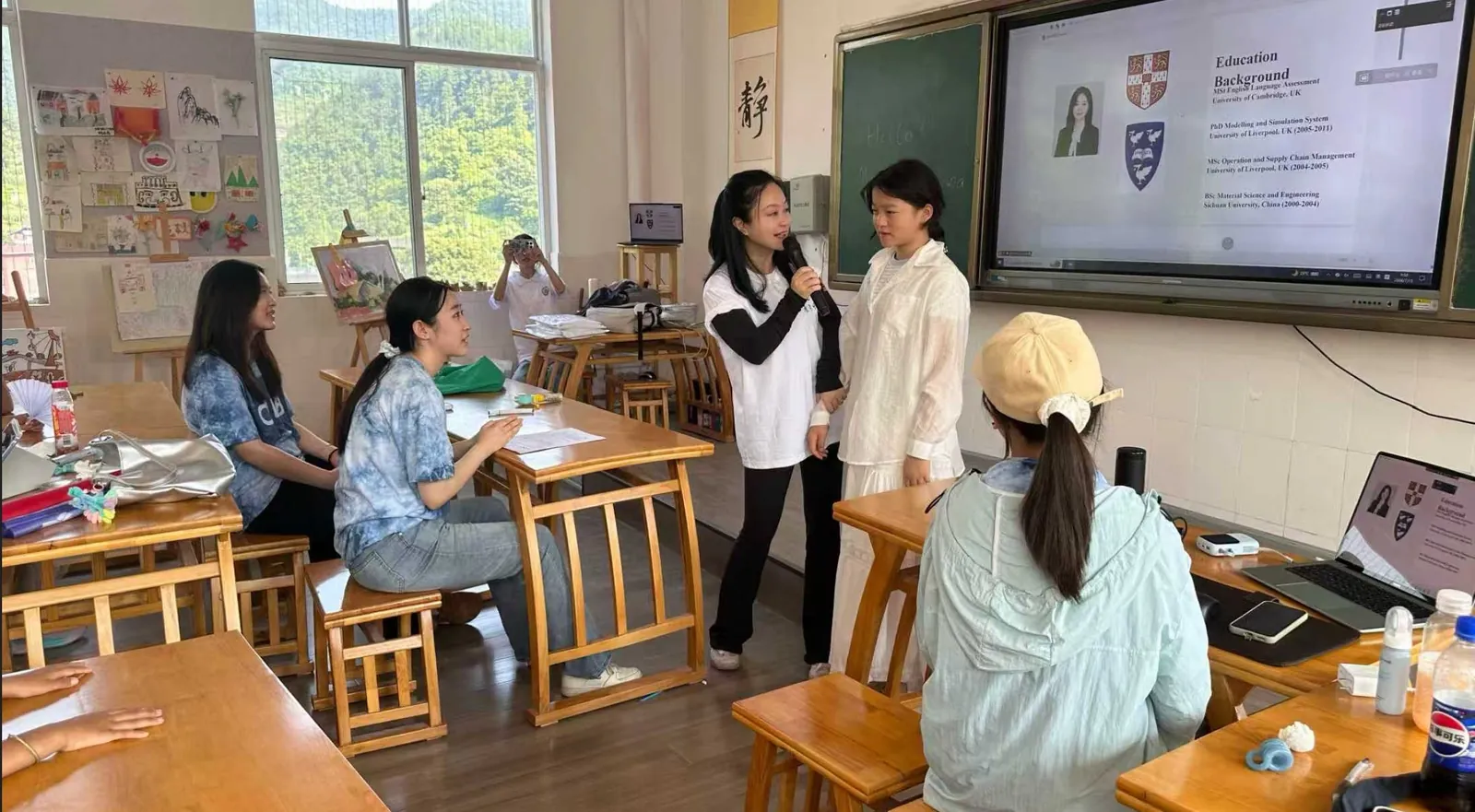
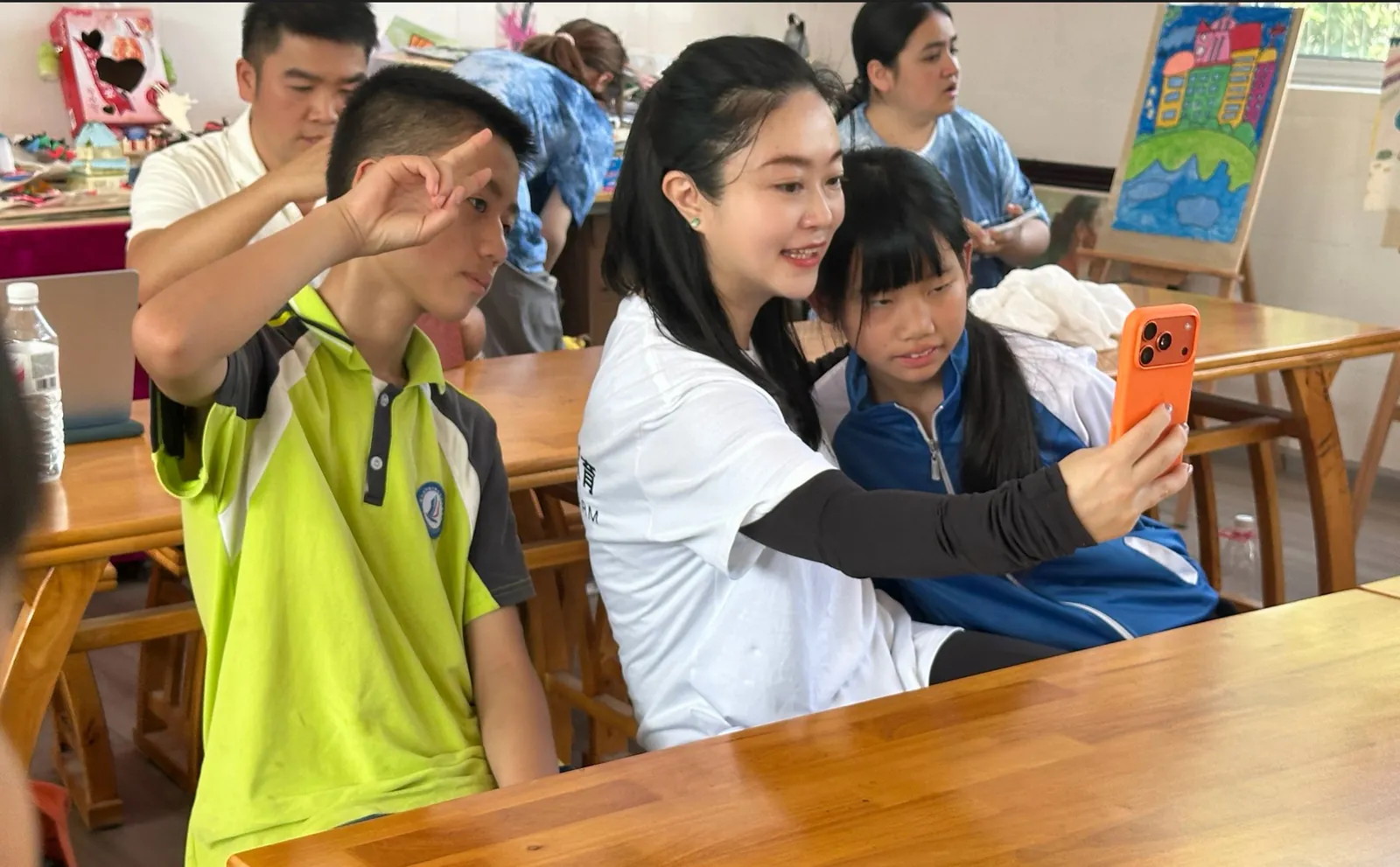
Following the class, Dr. Wang Lina offered an engaging and lively public‑welfare English lesson to the children at Heba Primary School. Using everyday vocabulary and expressions close to rural life, she employed interactive games, situational Q&A, and encouraging teaching methods to guide the children to speak up bravely. In the classroom, the children gradually moved from initial shyness to actively raising their hands and responding—their warm, genuine laughter deeply touched the teachers and volunteers who had come from afar.
Liu Hailiang and his Velowind team listened to the entire English class and afterward had friendly conversations with the children, offering encouragement and companionship. The Longcharm Education team also joined CUEB volunteers in classroom interaction and on‑site support. Liu Zinan remarked, “Seeing the children's enthusiasm makes every effort worthwhile. Bringing quality educational resources to where they are most needed is not just a slogan—it requires us to be present, time and again, beside the children.”
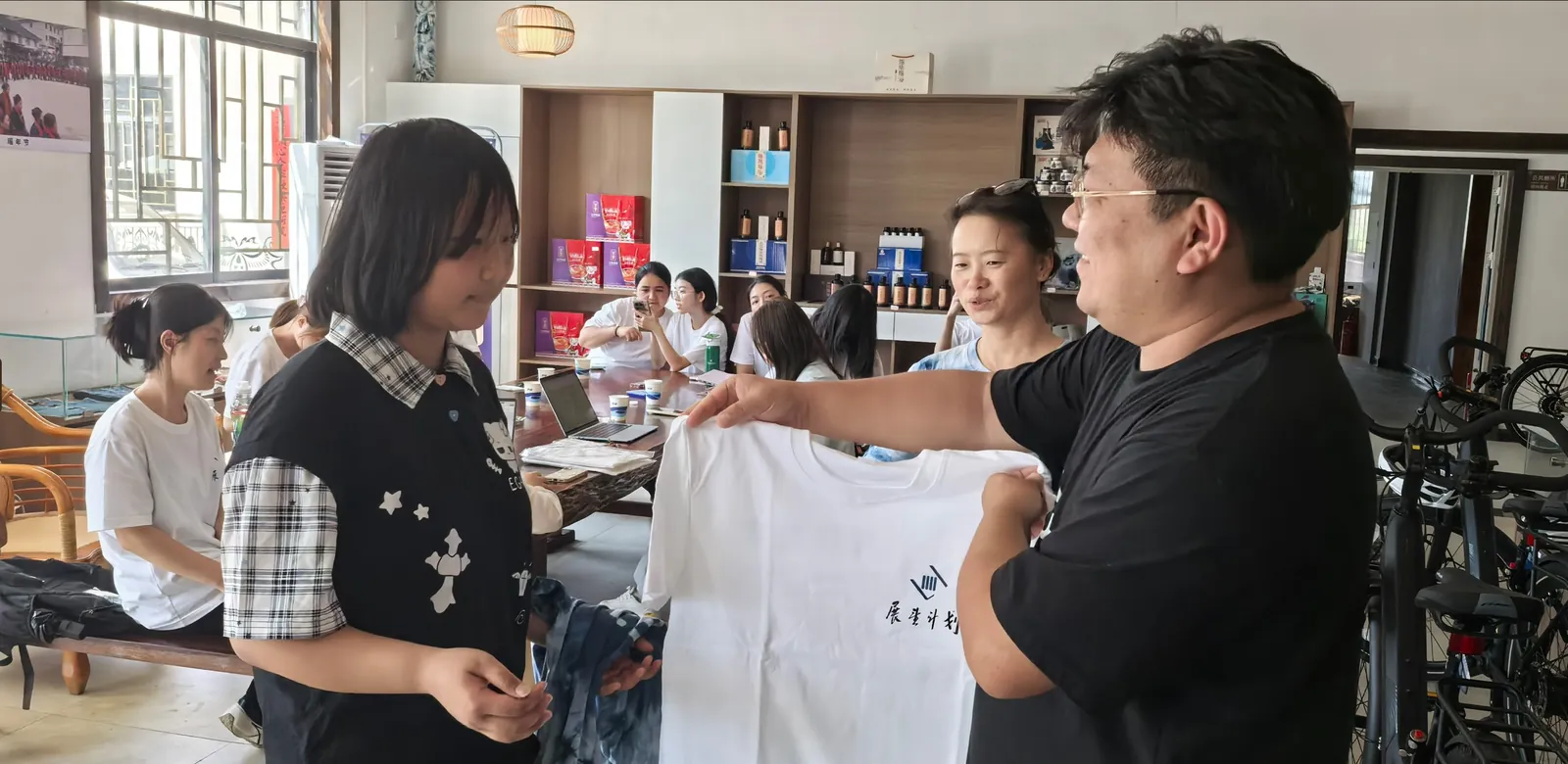
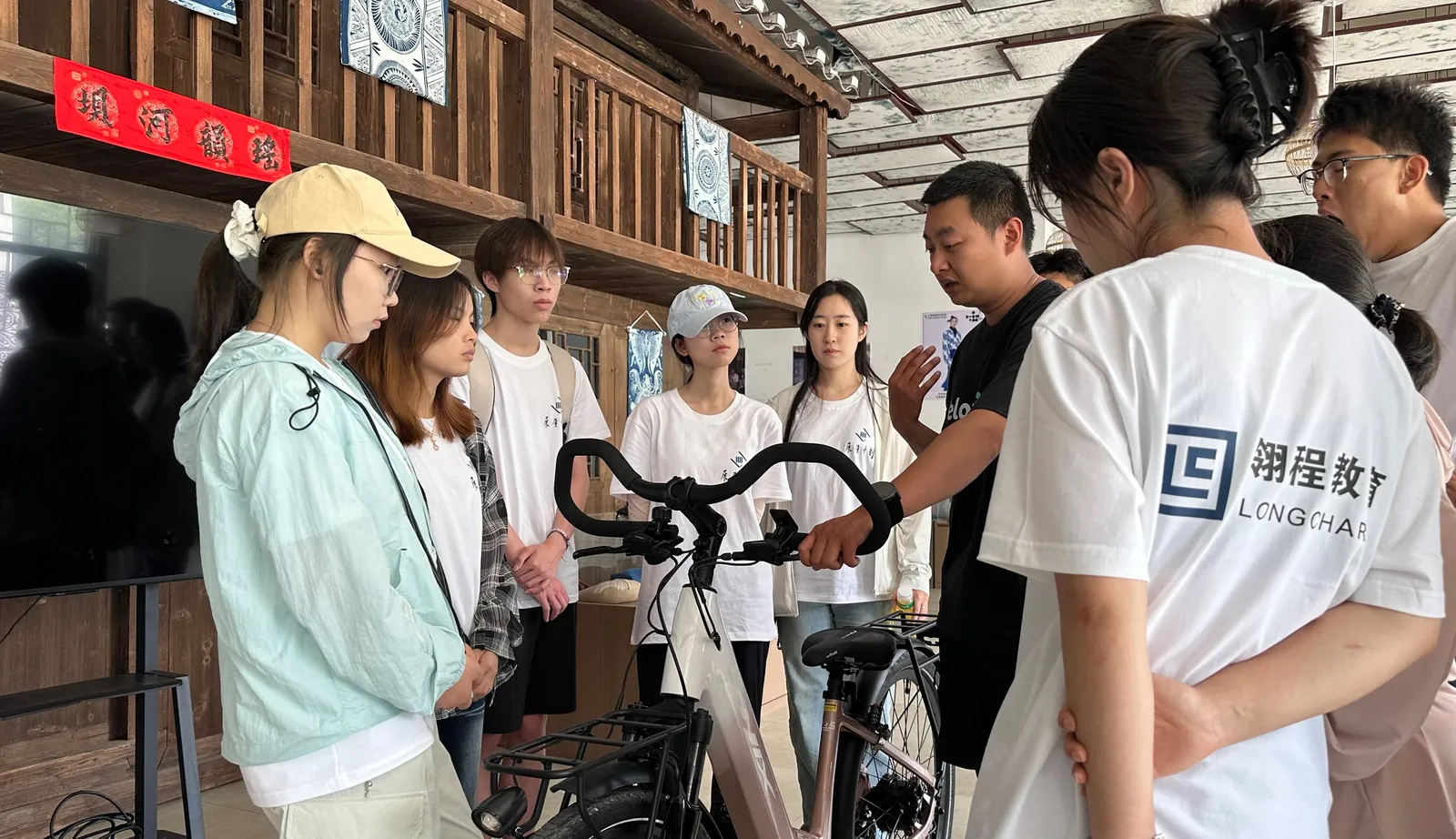
In the afternoon, a Velowind launch and exchange meeting was held at the Heba Fengxiang Dyeing Museum. Liu Hailiang introduced Velowind’s development philosophy and the purpose of participating in this event to the CUEB practice team, Longshan Town officials, Heba Village representatives, Yuncun Company, and local villagers. He expressed that Velowind aims to deeply integrate outdoor sports services with rural cultural tourism resources, bringing the company’s expertise in cycling route planning, outdoor activity organization, and rural tourism operations to Heba Village, so that urban youth, rural children, and local culture can truly connect through cycling routes and study tours.
Under the cooperative arrangements, SPDI, as the co‑organizer, provided public welfare coordination, project resource alignment, and overall communication support. Longcharm Education, as a sponsor, provided vehicles and equipment for the activities. Velowind, also a sponsor, offered cycling route planning, on‑site guidance, safety assurance, and other planning services. The three parties jointly designed the program, coordinated resources, executed on‑site activities, and planned follow‑up promotion around university social practice, rural cultural tourism experiences, youth public engagement, and green low‑carbon mobility pilot initiatives.
Concurrently, a joint Party‑Youth League branch building activity took place, where representatives from SPDI, Longcharm Education, and Velowind joined CUEB faculty and students, Longshan Town youth cadres, volunteers, and Heba Village Party branch members at the rice‑fish base for weeding and fun fish‑catching activities. They took off their jackets, stepped into the fields, and experienced rural life through soil and sweat, allowing university students and children to understand labor, rural life, and responsibility in real‑life settings.
During the “Everyone is a Promoter” exchange session on publicity and promotion, representatives from SPDI and Longcharm Education, together with CUEB student representatives, Longshan Town youth cadres, Heba Village officials, and young cadres responsible for new media work from various villages, engaged in in‑depth discussions on how to explore Heba Village's cultural stories, disseminate the village's positive image through new media, and transform intangible cultural heritage and tourism experiences into sustainable content.
Heba Village is a representative demonstration site for the integration of intangible cultural heritage and tourism in Majiang County, boasting resources such as Fengxiang dyeing, Yao ethnic culture, pristine rural scenery, and a cluster of homestays. SPDI has long focused on talent development between eastern and western regions, youth practice, and rural revitalization. Longcharm Education concentrates on personal growth, career development, and educational welfare support. Velowind is committed to exploring replicable and scalable paths for rural revitalization through the integration of outdoor sports services and rural tourism. The collective presence of these three organizations in Heba Village brought not only resources and methods but also the warmth of entrepreneurs who care for the next generation.
After the event, Dr. Wang Lina stated: “From Beijing to Heba, spanning over two thousand kilometers, no distance is too far when we are determined to make a real difference for children. SPDI, Longcharm Education, and Velowind will continue to work with CUEB and all partners to bring quality education into the mountains, root youth power in rural areas, and translate corporate responsibility into tangible, sustainable, and visible impact.”
Looking ahead, SPDI will continue to leverage its role as a co‑organizing platform and public welfare coordinator, joining hands with Longcharm Education, Velowind, and other partners to persistently promote warm, content‑rich, and impactful public welfare practices that serve rural youth, support university student social practice, foster rural cultural tourism innovation, advance green low‑carbon experiences, and strengthen local communication capacities—always staying close to the villages, accompanying the children, and serving development.
(Photos taken at the event site)