
Recently, Shanghai Prospect Development Institute (hereinafter referred to as "SPDI") and Guizhou Huma Digital Technology Co., Ltd. (hereinafter referred to as "Huma Digital") signed a cooperation framework agreement. According to the agreement, both parties will, adhering to the principles of "serving national strategies, addressing Guizhou's needs, integrating eastern and western resources, and promoting industrial implementation," establish a long-term and stable partnership focusing on areas such as executive and government talent training, rural revitalization talent cultivation, educational public welfare, and east-west exchange and resource linkage, jointly serving the development of Guizhou's talent pool and high-quality industrial growth.
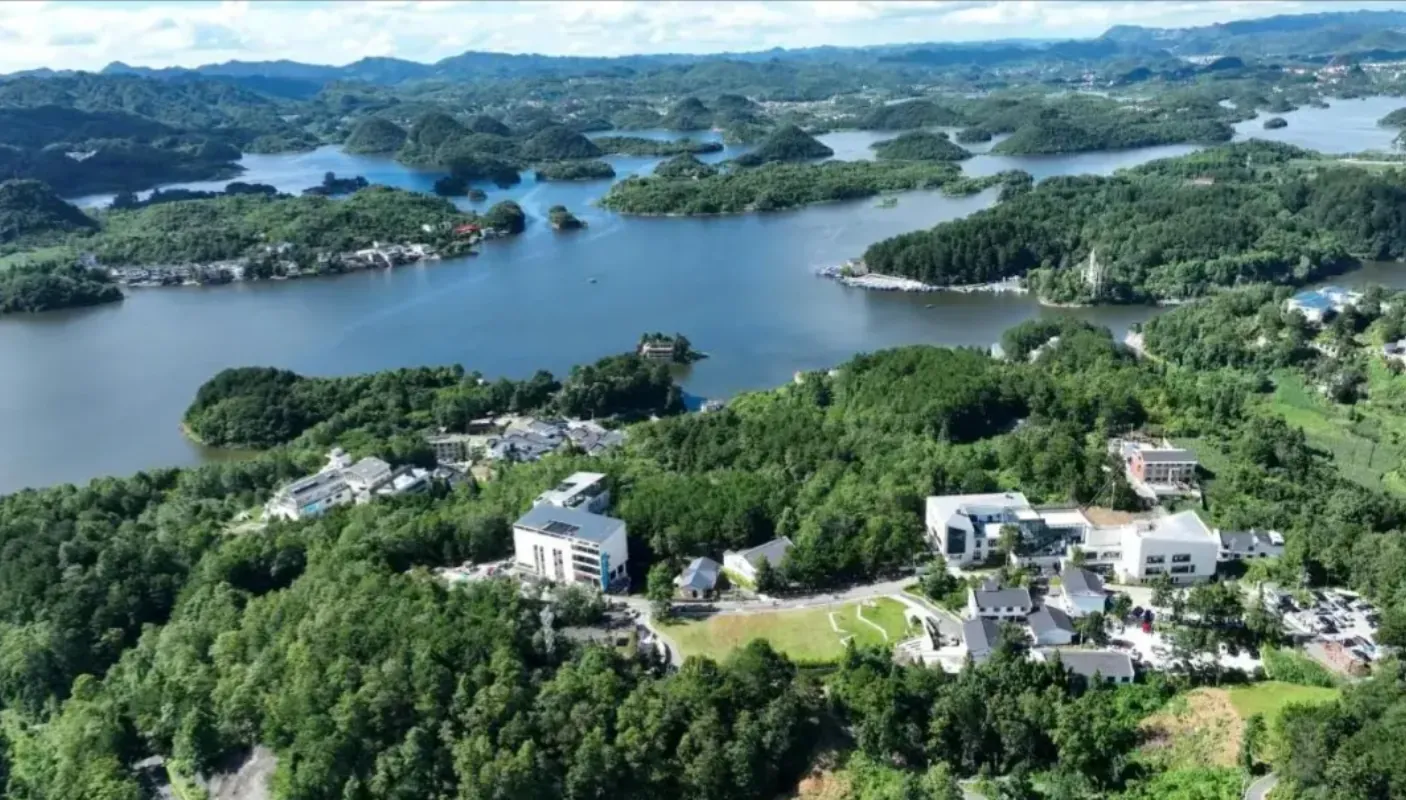
Huma Digital is a state-owned enterprise jointly funded by Guizhou Colorful New Media Co., Ltd. and Guiyang Baihua Urban-Rural Construction Development Co., Ltd. It bears the important mission of building the Xiaolanshan Digital Cultural Industry Ecological Village, serving the development of Guizhou's digital cultural industry, and contributing to rural revitalization. SPDI has long been dedicated to serving the national strategy for the large-scale development of western China, east-west talent exchange, and rural revitalization. In 2006, it was designated as a Shanghai training base by the Office of the Leading Group for Western Region Development of the State Council, and in 2010, it was awarded the honor of "Outstanding Collective for Contributions to the Large-scale Development of Western China" by the Central Committee of the Communist Party of China and the State Council. Over the past two decades, SPDI has trained more than 55,000 participants, covering 16 provinces, municipalities, and autonomous regions in central and western China, as well as over a thousand counties.
SPDI also has a long-standing historical connection with Guizhou. Between September 2000 and December 2009, officials at the division level or above from Guizhou’s provincial government bodies, 9 prefecture-level cities and autonomous prefectures, and 76 counties, county-level cities, and districts participated in relevant training programs at the Institute. This laid a solid foundation for the Institute’s ongoing efforts to enhance the capacity of Guizhou’s officials, improve county-level governance, and support local development.
This cooperation marks an important step for SPDI to deepen its services in the western region and support Guizhou's development against the backdrop of the start of the national "15th Five-Year Plan." At present, the central government's No. 1 Document continues to emphasize comprehensive rural revitalization and rural industrial development, and the new pattern of western development requires regions to strengthen their distinctive and advantageous industries based on local conditions. Guizhou boasts rich resources in ethnic culture, mountain outdoor sports, eco-health, rural tourism, and digital audio-visual content, offering broad space for integrated development across multiple sectors. Taking this cooperation as a starting point, SPDI and Huma Digital will jointly explore a "training + consulting + project + industry" cooperation model—enhancing understanding through training programs, opening up resources through east-west exchanges, formulating plans through project coaching, and promoting industrial development through implementation on the ground. SPDI will leverage its professional strengths in curriculum design, faculty and expert resources, and east-west cooperation networks; Huma Digital will rely on its capabilities in industrial park operations, local resource coordination, and media communication to support project implementation and transformation of outcomes.
The two parties will focus on advancing cooperation in five key areas:
First, thematic training for government and enterprise talent – designing specialized training programs for government officials, state-owned enterprise managers, industrial park operators, and key business leaders in Guizhou, focusing on topics such as digital economy, cultural industries, cultural-tourism integration, rural revitalization, and county-level economic development.
Second, social and industrial talent cultivation – providing practical and interdisciplinary talent training for professionals in Guizhou's cultural tourism operations, rural industry leaders, rural entrepreneurs, young innovators, and new media practitioners.
Third, rural revitalization and county-level industry empowerment – drawing on SPDI's historical experience in the "Western Talent Project" and "Rural Entrepreneurial Project," conducting talent training and demonstration projects in areas such as specialty agriculture, ethnic culture, rural tourism, and the integration of agriculture, culture, and tourism.
Fourth, educational public welfare and youth development – advancing public welfare or quasi-public welfare projects in rural areas, including English training, comprehensive quality improvement, technology and cultural study tours, and teacher capacity building, to promote educational equity and long-term talent cultivation in rural communities.
Fifth, east-west exchange and resource linkage – organizing exchange visits, study tours, and project matchmaking between Guizhou's government and enterprise talent and relevant institutions in the Yangtze River Delta, the Greater Bay Area, and other domestic and international regions.
SPDI stated that Guizhou is a key region for western development and comprehensive rural revitalization, as well as an important arena for ethnic culture, mountain outdoor sports, eco-health, and cultural-tourism integration. Looking ahead, SPDI will take this cooperation as a bond to continuously integrate resources in education, international exchange, rural revitalization, and industrial empowerment, and work together with Huma Digital and partners in the Colorful New Media ecosystem to promote more practical projects in Guizhou, contributing to the development of Guizhou's talent pool, high-quality cultural industries, and rural revitalization.